Companion robot for older adults
It keeps older adults company and measures cognition and prefrontal activity during daily interaction, so families and care workers can see change early and step in.
The challenge
Taiwan crossed 20% aged 65+ in 2025; the region is following.
Sleep, stress, attention and memory shift quietly for months.
Many older adults live alone, and rural elders live hours from a hospital.
Portable research fNIRS systems are estimated at tens of thousands of US dollars or more.
The solution
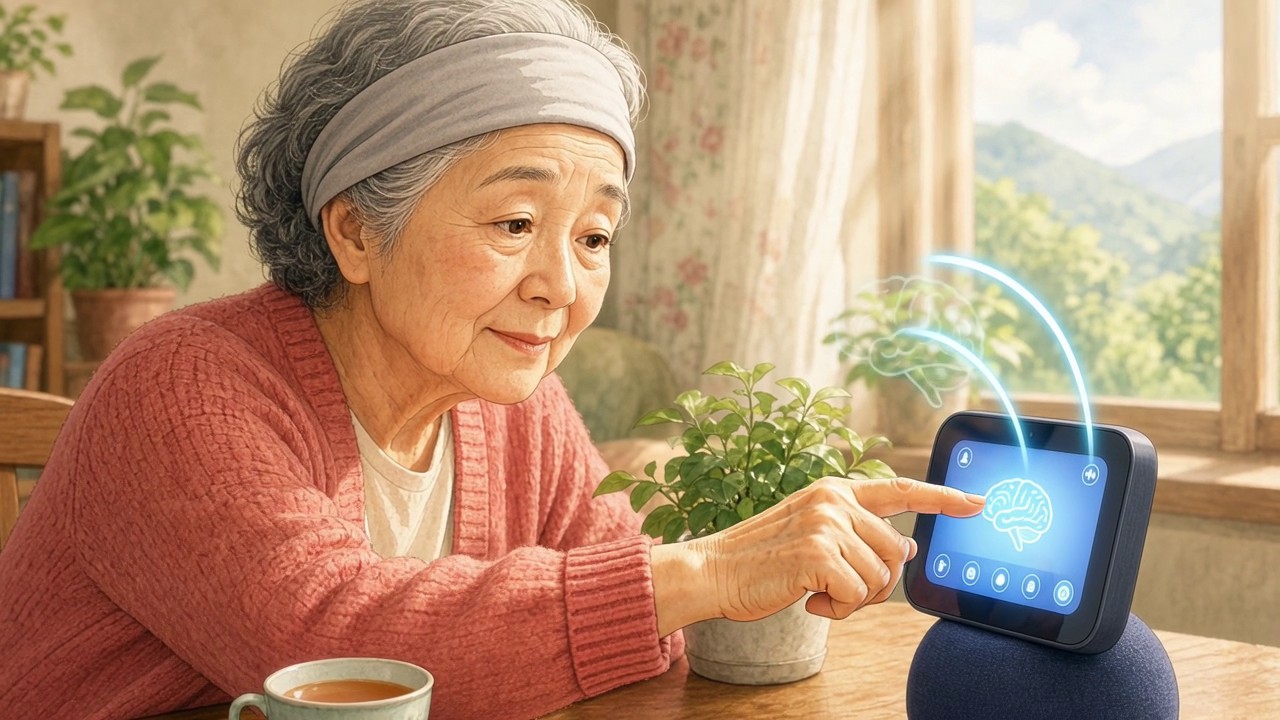
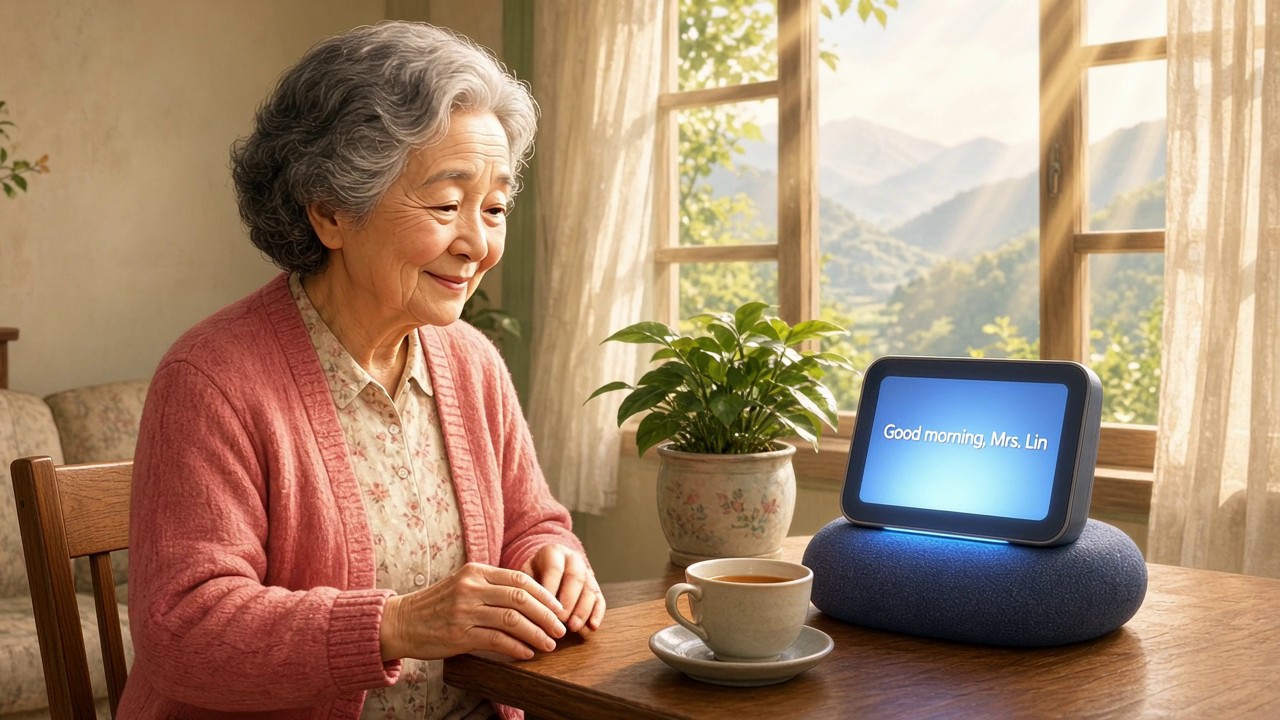
Talks, reminds and plays brain games with the older adult every day.
Behind the robot
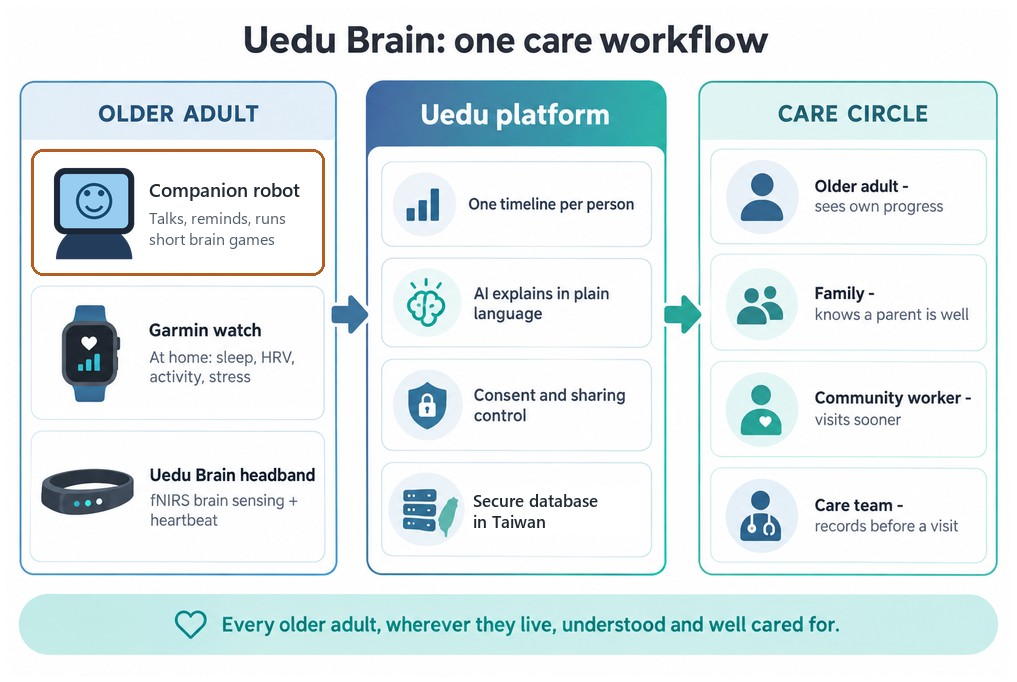
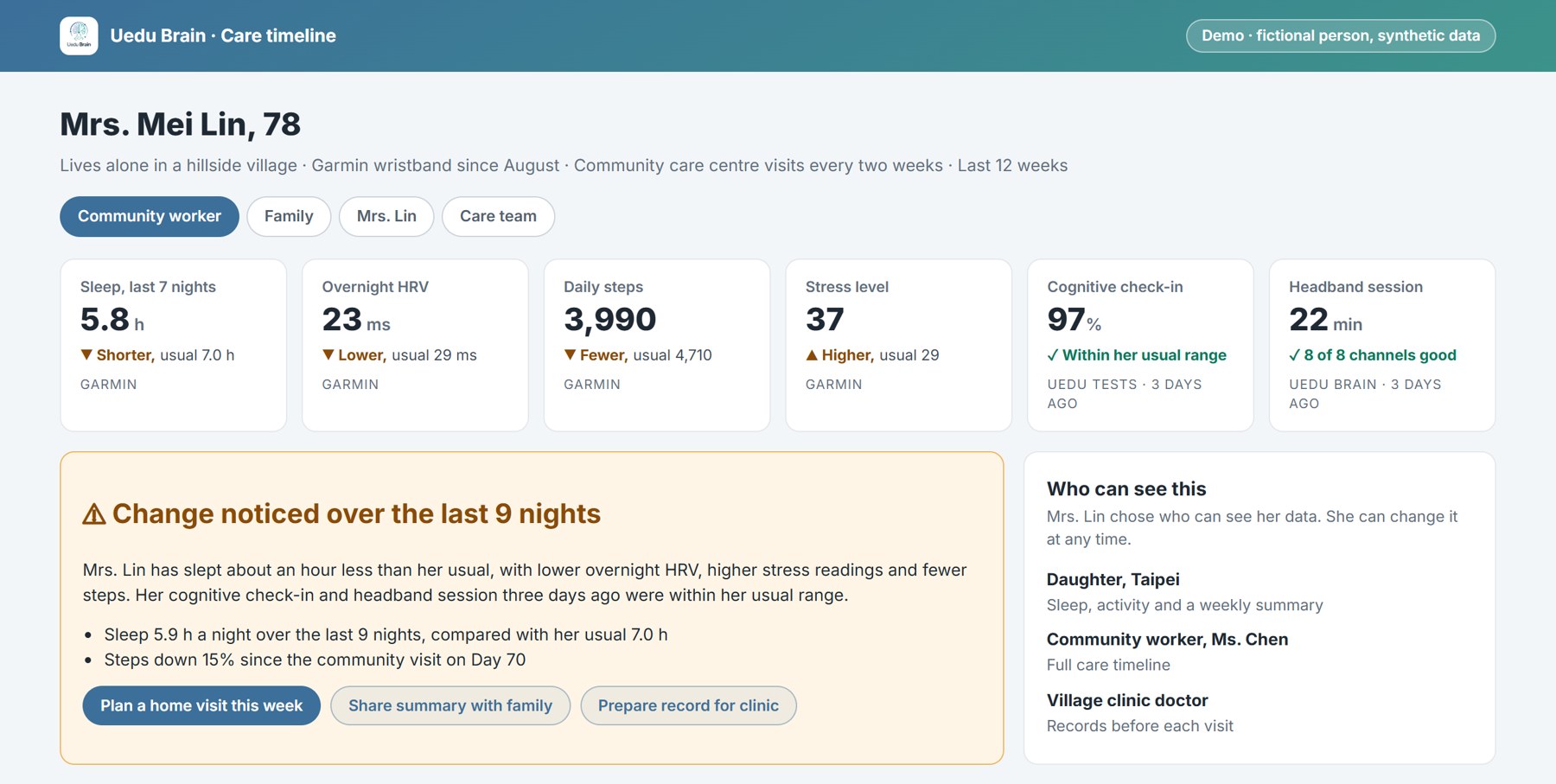
One timeline for each person, with AI in plain language and consent control
Each person's record of body, brain and cognition, built up over months
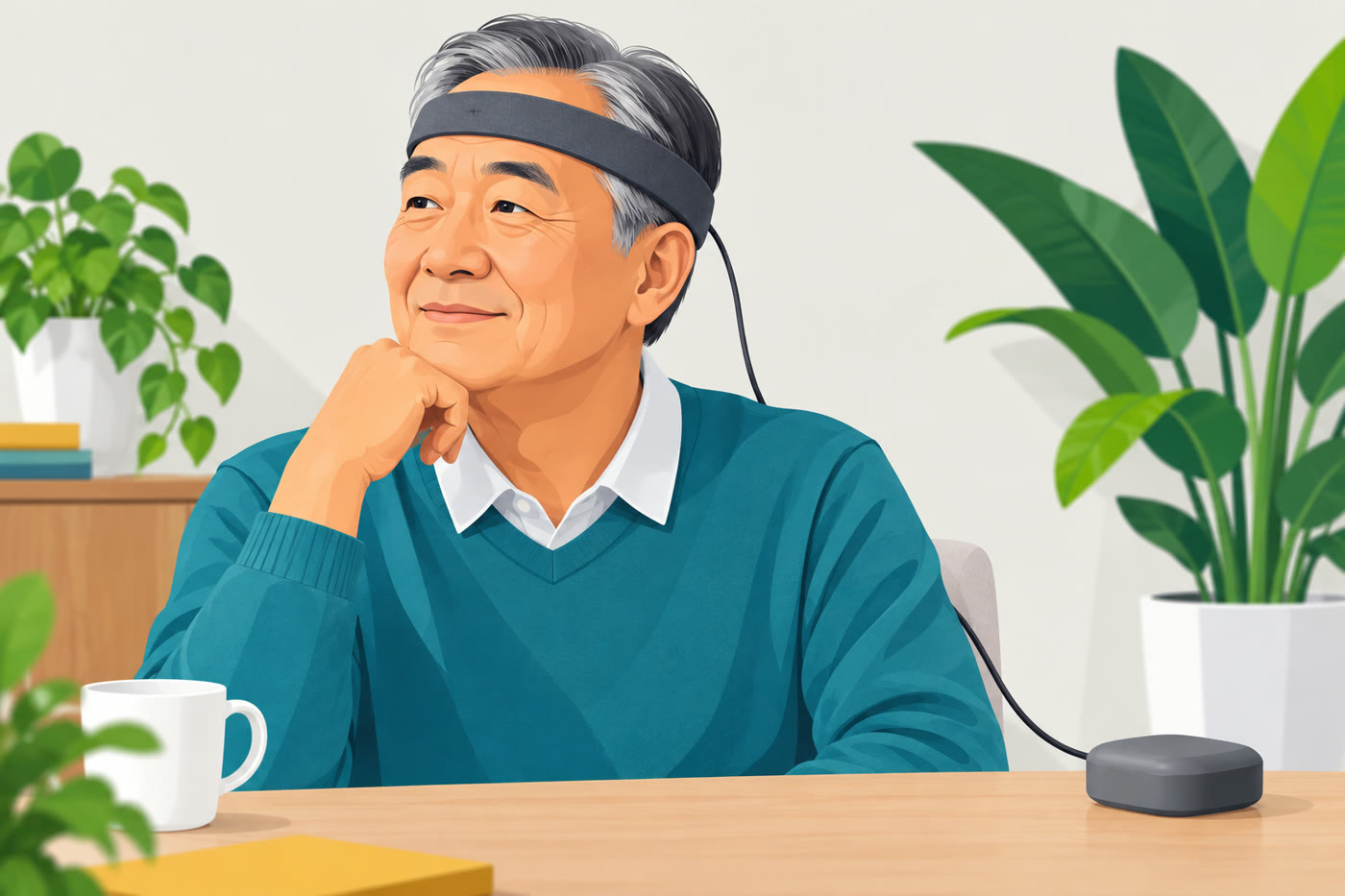
Our own fNIRS headband, built to add EEG, and a Garmin watch
sees own progress
knows a parent is well
notices change, visits sooner
gets records before a visit
System architecture

How it works
Conversation, reminders, stories and photos from family.
Daily HRV, sleep, steps and stress via the Garmin Health API.
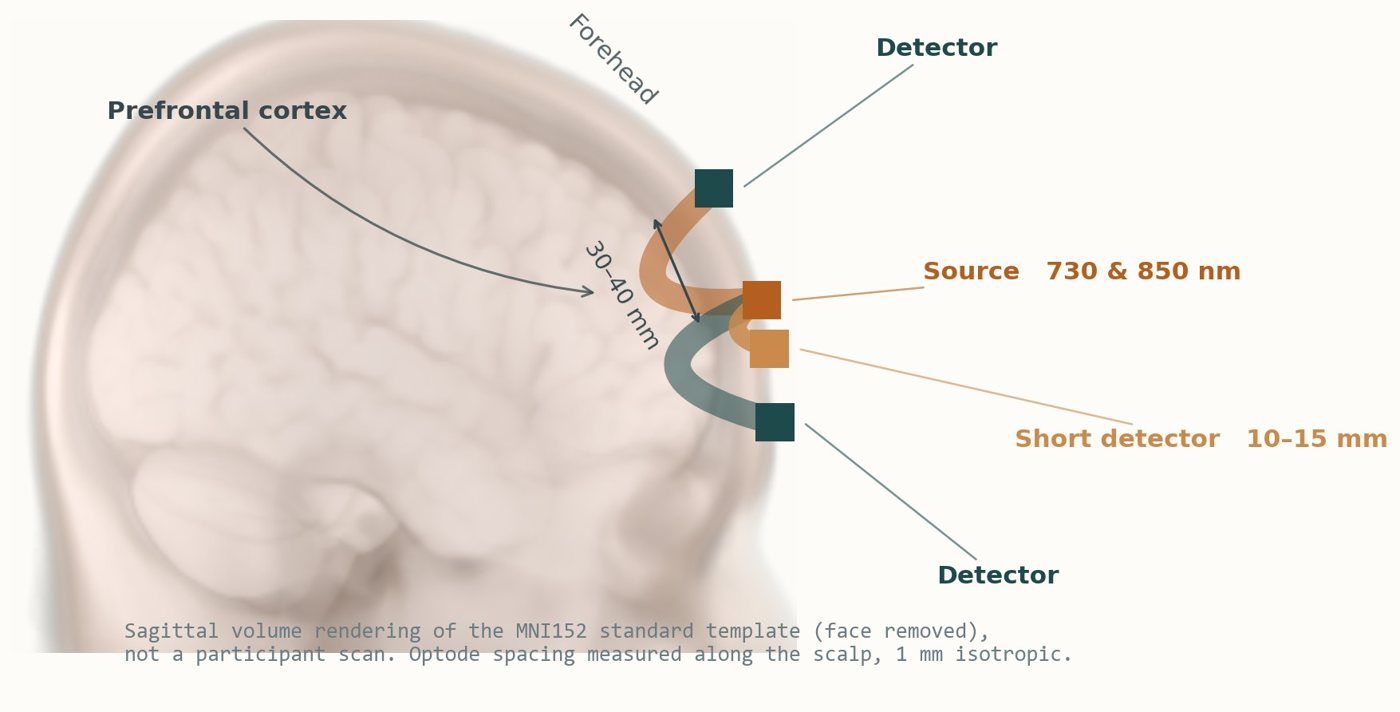
The robot guides a short session: 8 fNIRS channels and heartbeat intervals. USB today, Bluetooth next.
AI explains trends in plain language; care teams get records before a visit.

Every measure compared with the person, not a population.
Suggested next steps for family and care workers.
Elder, family, worker and care team each see what they need.
What makes it different
Body, brain and cognition aligned for each person, on one clock.
We design the headband, the board and the platform.
~US$650 in headband components.
23 tests, 8 domains, millisecond timing.
Garmin Health Awards 2023 top-three finalist, the only team from Asia.
Many teams can build companion robots and cognitive tests. We work on usable prefrontal signals during the interaction.
| Capability | Uedu Brain | Companion robots | Elder-care wearables | Research fNIRS systems |
|---|---|---|---|---|
| Daily company and reminders | Prototype | Reminders only | ||
| Everyday physiology at home | Varies | |||
| Cognitive games | Some | Rarely | Separate software | |
| Brain signals | ||||
| One timeline per person | Single signal | Lab sessions | ||
| Affordable for a family or centre | Varies | Tens of thousands of US$ or more | ||
| Shared with family and care team | Family | Varies | Researchers only |
Inside the headband


730 and 850 nm
Left and right, F7 and F8
Brain and scalp channels
5.0 ms vs Polar H10
per session, ear-clip ground
Bluetooth to iPad next
Modular design
in components
Value to community and society
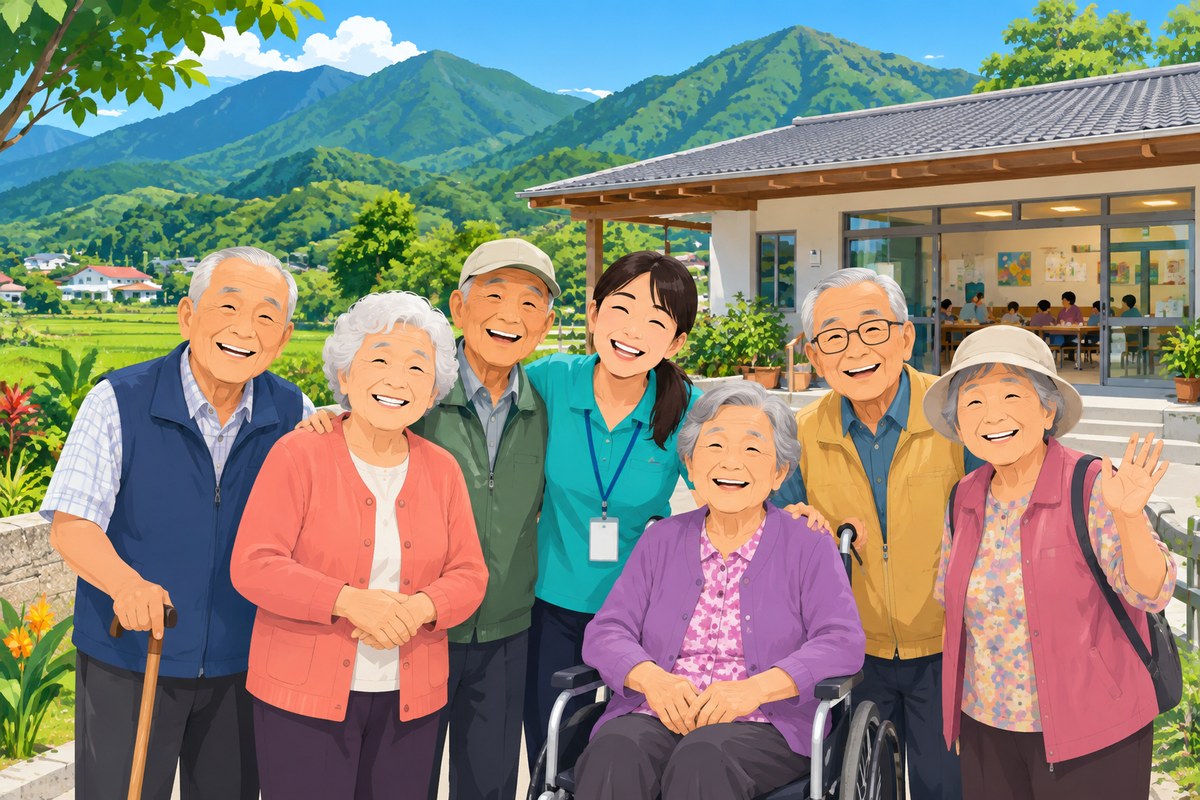
With family, community centres and local clinics behind them
Talk, play, wear a light headband
A fraction of research systems
Interface ready for the region
Someone to talk with, reminders, and favourite stories.
Children in the city see a parent is sleeping and moving well.
Changes in sleep, cognition or brain signals are noticed early.
Organised records before a visit, not memory.


Quality and trust
5.0 ms vs Polar H10; consistent breath-hold response
Millisecond game timing; no AI calls during tests
Primary and standby servers; updates without interruption
The older adult decides who sees their data
Heartbeat intervals
Stored on Uedu's own servers
Our journey
Garmin Health Awards 2023 top-three finalist; 60+ partners entered, the only team from Asia in the final.
AI-supported platform by Chia-Kai Chang; later Garmin integration and 23 cognitive tests.
Our own 8-channel fNIRS headband, validated against Polar H10.
Reminders, guided headband setup, Bluetooth, the EEG module, and pilots with homes and care centres.
Team
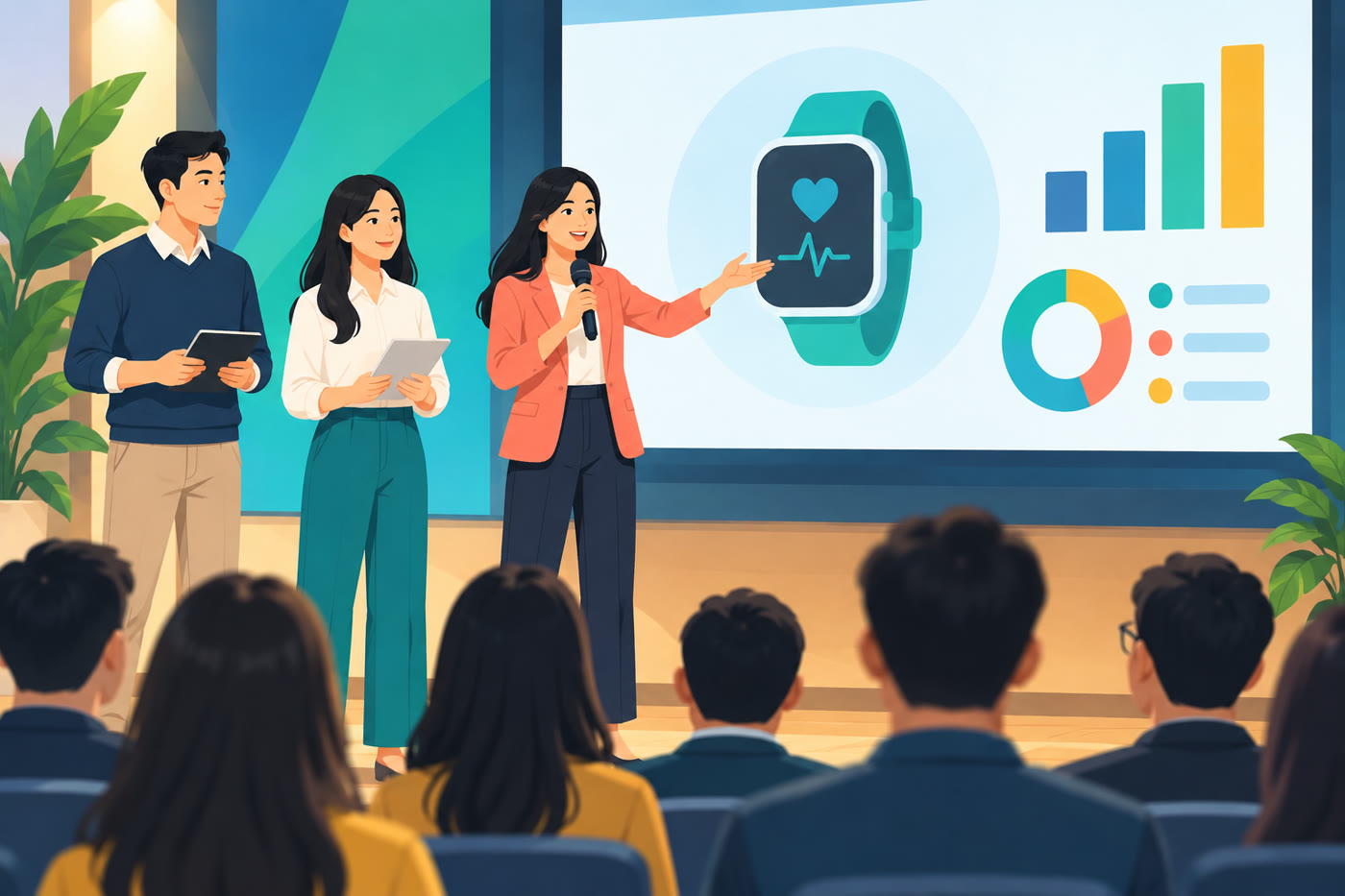
Founder. Leads Uedu, the care workflow and the research.
Co-Founder. Builds and operates the Uedu platform.
Research Assistant. Builds and validates the headband.
Pilot with us
We welcome local governments, community care centres, active-ageing learning centres, local clinics and companion-robot makers to plan a small pilot with us.
Together we can plan the setting, train community workers, and evaluate how older adults use the tools, whether noticed changes are followed up, and how health habits change over time.
A companion robot at home, with brain measurement once confined to hospital laboratories.